Lead flashing &
leadwork in Bristol
Valleys, chimney flashing and detailing — done properly, and with the right approach if your property’s listed or in a conservation area.
Common leadwork jobs
Lead’s used wherever a roof meets something else — a chimney, a wall, a valley between two roof slopes. It’s also one of the most common places a “mystery leak” is actually coming from.
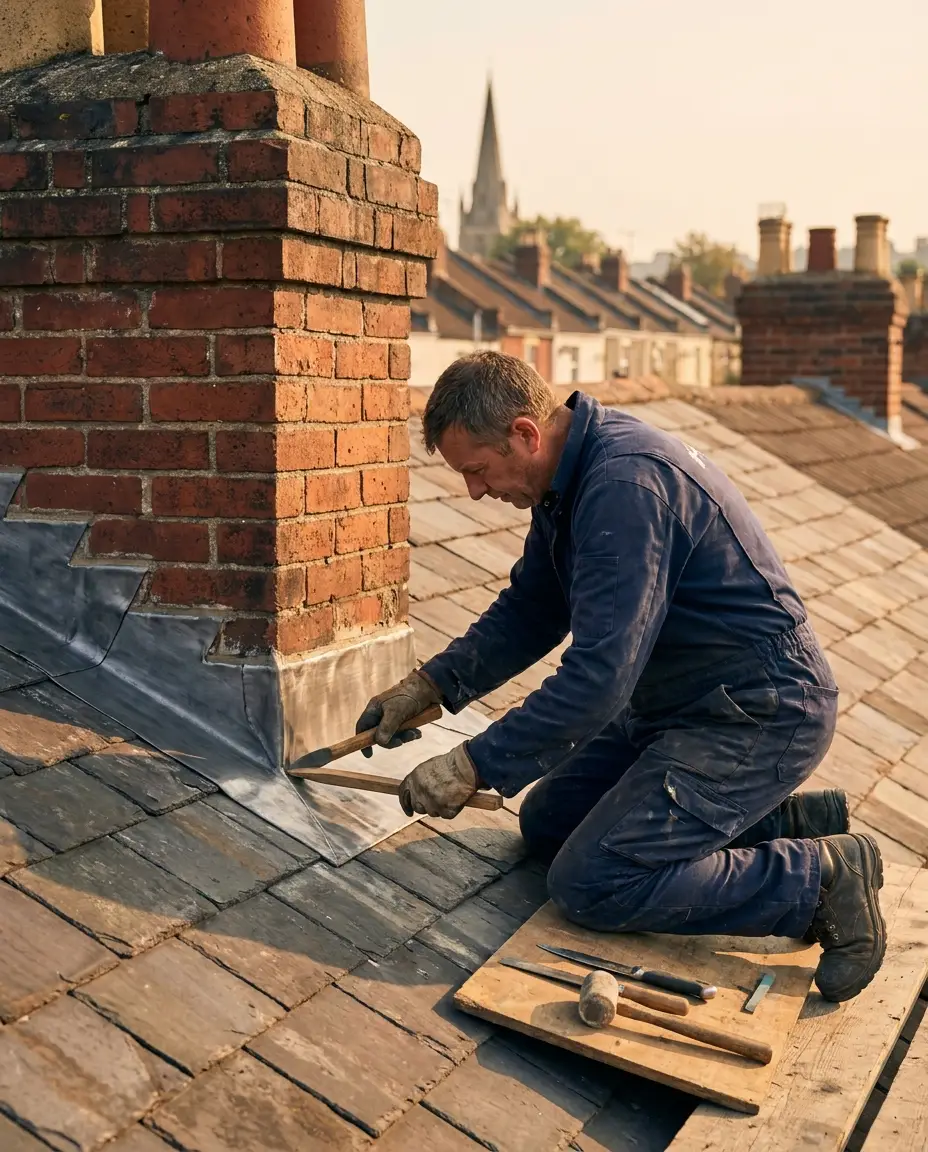
Chimney flashing
Where the roof meets the chimney stack — a frequent source of leaks that often shows up well away from the actual cause.
Valley leadwork
Where two roof slopes meet. Worn or split lead here lets water track in along the join.
Abutment flashing
Where a roof meets a wall — extensions and dormers are common spots for this to fail.
Dormer & bay window lead
Detailed shaping around dormers and bay roofs, matched to the existing profile where it’s a repair.
Parapet & flat roof edges
Lead detailing on flat roof upstands and parapet walls, common on Georgian and Victorian terraces.
Listed building leadwork
Like-for-like repairs and replacements that respect the property’s character and consent requirements.
If your property is listed
Bristol has a lot of period housing stock, particularly in Clifton, Cotham, Redland and parts of Bedminster — and the rules here genuinely matter.
Listed Building Consent is separate from planning permission
Roofing work on a listed building almost always needs Listed Building Consent, regardless of grade — this applies even if no planning permission is otherwise required.
Like-for-like repairs may not need formal consent
Routine repairs that exactly match existing materials sometimes don’t require consent — but it’s always worth checking with Bristol City Council’s conservation team first, not after.
Material matching matters
Conservation officers generally expect repairs to match the original material and profile as closely as possible — this is something we factor into the quote.
we’ll flag it before quoting
If your property looks like it might be listed or in a conservation area, we’ll say so up front rather than leaving you to find out later.
What leadwork costs
Standard lead flashing repair
Around £350 on average for a typical chimney or valley repair
New lead installation
£80–£130 per m², depending on lead grade and detailing complexity
Listed building work
Often similar cost to standard work, but expect more time for consent checks before starting
Lifespan
Properly installed lead commonly lasts 60+ years with minimal maintenance
Leadwork FAQs
-
How do we know if our property needs Listed Building Consent?
Check the Historic England list, or ask Bristol City Council’s conservation team directly — it’s free to ask before you commit to any work.
-
Can lead flashing be repaired, or does it need full replacement?
Often repaired if the damage is localised. Widespread cracking or splits across a whole section usually points to full replacement being more sensible long-term.
-
Is lead theft a real risk?
It happens occasionally on accessible flat roofs. If you’re concerned, ask us about alternative materials for less visible or easily accessed areas.
-
How long does leadwork last?
Well-installed lead commonly lasts 60 years or more — it’s one of the most durable materials used in UK roofing.
Leadwork is often part of a wider job — see roof repairs or re-roofing. Active leak right now? Go straight to emergency callouts.
Got a lead flashing leak, or a listed property roof to sort?
Honest advice on what’s needed and what consent might apply, before any work starts.